The prayer you don't say
will keep you up
till the break of day.
As you toss in bed,
sleepless through the night,
it arises in your head
to get up and to write.
So scribble your restless heart
as it searches for its home:
they may remain far apart,
but at least you'll have a poem.
Tuesday, October 9, 2012

Monday, October 8, 2012
The Meaning of Art

"To give the intellectual meaning of the Divine work of art is possible only by creating art."
From a homily by Romilo Knežević

The relationship between the mystical life and the creative life is so deep as to often be overlooked, because our minds gets in the way. For some reason, we don't intuit that a creative action requires a creative response: art is hung in museums and not in studios, while orchestras play to audiences and not to musicians. The arts have become spectator sports, where the layman is puzzled and the intellectual evaluates. So often people think the correct response to art is to ask the questions, "What's it really about? What does it really mean?" These questions are asked about art as much as they are about religious life, but they are intellectual questions, which can only receive intellectual answers; and so they are essentially different than artistic or mystical questions, which must receive artistic or mystical answers.
Art doesn't work on the level of an intelligible formal cause alone, but asks us to value the fact that there is matter at all. Paint, wood, sound, and wool are not the material wrapper to the formal lollipop anymore than human hands are to human thoughts. All of this matter, this stuff was created with intrinsic value of its own: "God saw everything that he made and behold, it was very good" (Gen 1:31). The soul's greatness lies in its ability to elevate and sanctify the matter given to it. This is true in the bread and wine offered by the priest in Liturgy. This is true in health when we exercise and eat well. This is true is social ethics when we meet the needs of our neighbor so that we can both be more than we were given.
So in one sense art pertains to the material cause, but even more so to the efficient cause. If God's creativity is the thing we are the most thankful for, the only proper response is more creativity: "Go and do likewise" (Luke 10:37). If we have really perceived the beauty in art we must become creative agents ourselves. If we really hear beautiful music, we may so resonated as to sing along. However the synaesthetic quality of humanity means that we do not only have to answer music with music: as so often we answer music with dance, which is no less creative. The best way to give thanks for being created is to create.
So what is it really all about? The final cause of art grows out of God's creativity and person, which are identical. The end of every human soul is to become a partaker in the divine nature (2 Pet 1:4) such that our humanity resonates in a divine manner (theosis). Art is an energetic microcosm in which we become more creative and more persons, because just as art transforms material into a means to unite the artist with his audience, so we are the material which must be transformed to unite divinity and humanity.
Meaning means the relationship between the two entities, or the medium by which the two entities communicate themselves to one another. Man finds his identity in being simultaneously the receptive listener in this conversation and the language created to speak the God's own Word. We are the means to his end and we are what he means to say: "The medium is the message" (McLuhan).
The paradoxical dual- (and even hypostatic) existence of humanity, as both means and end, is the heart of artistic inspiration. When are truly creative, we understand we can only move our pen or voice to the degree that we are moved ourselves. Our creativity cannot come from ourselves, because what we wish to express is ourselves: how can a mouth say a word which is bigger than it?
I need a mouth as wide as the sky
to say the nature of a True Person, language
as large as longing.
—Rumi
Our creativity must draw on a creativity which is more primordial than our near-sighted idiosyncracies. Art is a means of communication between the artist and his audience, which necessarily means it is something bigger than the artist herself: so her work must ecstatically root itself in a creativity deeper than any dreams she has sketched or criticism she could anticipate. Some religious people root their criticism of some men in God's deeper criticism of all men, but with regard to art neither our criticism nor our appreciation cannot fathom the depths of his creativity. So let us sketch his sketches and sing his songs until they are truly ours.

Photo credits:
Iconographer: http://vimeo.com/48602918
Arvo Pärt and Tintinnabuli: http://www.last.fm/music/Arvo+Pärt
Woman with Turkish Carpet: http://davidcolemanphoto.photoshelter.com/image/I0000WsPk0.e.aF0
Friday, October 5, 2012
Anam Cara: Friends In Silence
 |
| This book has been with me for almost a decade now. One of my most formative books, without me realizing it. |
Friday, September 21, 2012
When We're Away
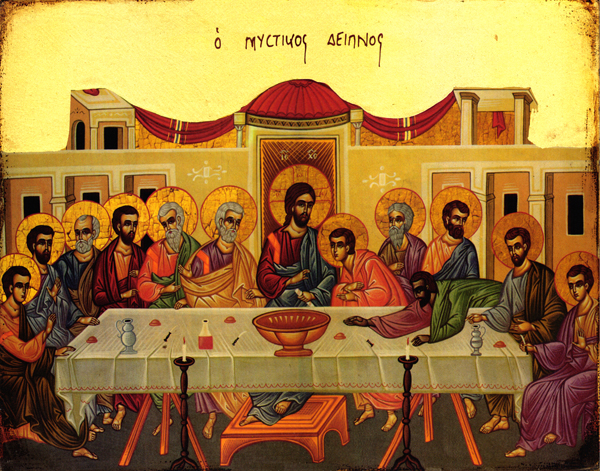
When I think of what you hold
is it only wine and wheat?
Will this Mystery please unfold
and my hungry heart entreat?
Could all the days of your life,
when you walked this land,
put an end to all my strife
and set themselves in my hand?
All my friends and all your souls
safely swim in holy wine.
God who loves, God who consoles,
You gave me all I thought was mine.
Friends go away and rarely meet
scattered way too far:
crushed grapes and ground wheat
offered upon an altar.
I come to take this bread and wine,
I make my way to You,
You took all I thought was mine:
O Lord, take me too.
Sunday, September 9, 2012
Saturday, September 1, 2012
A Word On Time
My word embraces the silence as
a drop holds the sea.
A
drop and the sea are thoroughly water: the only difference is time.
One day a drop will fall and be held by
the sea,
which is nothing but the largest drop
who receives its dancing
brothers on its dimpled face.
A
word is born out of the same silence to which it will return.
A word is silence through and through,
though there is a difference of time.
In time a word is a moving silence,
dancing from mouth to ear, mind to
mind, heart to heart.
Then what is
Then what is
time?
Eternity swallows every single moment
while eternity is carried in every moment.
Rather
than being a lost and lonely sister to the Past and the Future,
the Present is
their Mother who holds both so close to her breast.
The Past bemoans her suffering and the Future confides her
anxieties.
The Past recounts her
joys while the Future shares her hopes.
In it all, the Present has selflessly receded to
more lovingly listen to
both her daughters.
She
is that blink of an eye that embraces everything in sight.
Thursday, August 2, 2012
Beauty and Balthasar
 |
| I read the following quote almost six years ago, and then I knew I wasn't alone in my theological interest. |
From The Glory of the Lord. A Theological Aesthetics, Part I: Seeing the Form (San Francisco: Ignatius Press, 1982), 18.
Subscribe to:
Comments (Atom)