Friday, September 21, 2012
When We're Away
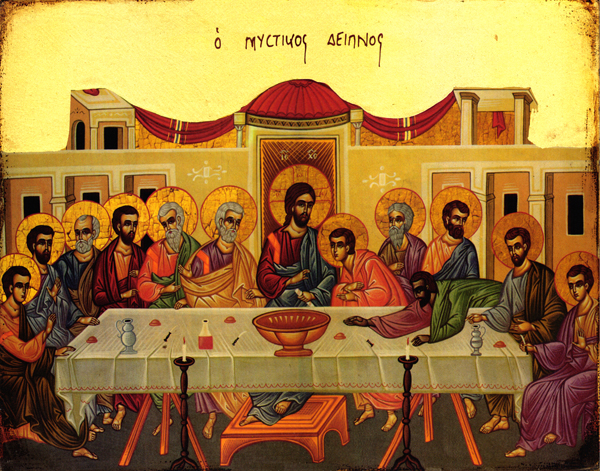
When I think of what you hold
is it only wine and wheat?
Will this Mystery please unfold
and my hungry heart entreat?
Could all the days of your life,
when you walked this land,
put an end to all my strife
and set themselves in my hand?
All my friends and all your souls
safely swim in holy wine.
God who loves, God who consoles,
You gave me all I thought was mine.
Friends go away and rarely meet
scattered way too far:
crushed grapes and ground wheat
offered upon an altar.
I come to take this bread and wine,
I make my way to You,
You took all I thought was mine:
O Lord, take me too.
Sunday, September 9, 2012
Saturday, September 1, 2012
A Word On Time
My word embraces the silence as
a drop holds the sea.
A
drop and the sea are thoroughly water: the only difference is time.
One day a drop will fall and be held by
the sea,
which is nothing but the largest drop
who receives its dancing
brothers on its dimpled face.
A
word is born out of the same silence to which it will return.
A word is silence through and through,
though there is a difference of time.
In time a word is a moving silence,
dancing from mouth to ear, mind to
mind, heart to heart.
Then what is
Then what is
time?
Eternity swallows every single moment
while eternity is carried in every moment.
Rather
than being a lost and lonely sister to the Past and the Future,
the Present is
their Mother who holds both so close to her breast.
The Past bemoans her suffering and the Future confides her
anxieties.
The Past recounts her
joys while the Future shares her hopes.
In it all, the Present has selflessly receded to
more lovingly listen to
both her daughters.
She
is that blink of an eye that embraces everything in sight.
Thursday, August 2, 2012
Beauty and Balthasar
| I read the following quote almost six years ago, and then I knew I wasn't alone in my theological interest. |
From The Glory of the Lord. A Theological Aesthetics, Part I: Seeing the Form (San Francisco: Ignatius Press, 1982), 18.
Wednesday, August 1, 2012
Wednesday, July 25, 2012
Moving On
"What needs to be discharged is the intolerable tenderness of the past, the past gone and grieved over and never made sense of. Music ransoms us from the past, declares an amnesty, brackets and sets aside the old puzzles. Sing a new song. Start a new life, get a girl, look into her shadowy eyes, smile."
Walker Percy, Love in the Ruins: A Novel
Friday, July 13, 2012
Romance in Romanticism
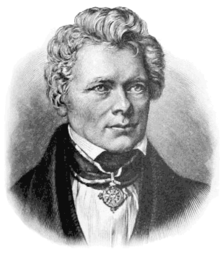
This is one of my favorite moments in German Romantic history. Schelling was one of the most acute, passionate, and profound thinkers of Romanticism, whose insights challenged thinkers such as Fichte and Hegel. His thought was incredibly influential to Samuel Taylor Coleridge, who would really stoke the fires of British Romanticism. Schelling's rigorous intellect, strong-willed character, and joyful stoicism was so remarkable, that upon first meeting him, Caroline Schlegel wrote to her brother-in-law, Friedrich . . .
Caroline Schlegel: Believe me, my friend, he is, as a man, more interesting than you concede: a real primal nature [rechte Urnatur]; in terms drawn from the world of minerals—granite.
Friedrich Schlegel: But where will he find female granite?
This is quite a statement coming from Caroline, who was married to another great German Romantic, August Wilhelm. She was a tenacious mind during this period, who between debating Novalis, Fichte, Hegel, Schiller, and even Schelling, was able to find the time to translate Shakespeare's works into German. This poignant moment of correspondence brings a smirk to historians' faces, because after divorcing Friedrich's brother, Caroline proved this moment prophetic moment by marrying Schelling, and showed that granite comes in many forms.
Caroline Schlegel: Believe me, my friend, he is, as a man, more interesting than you concede: a real primal nature [rechte Urnatur]; in terms drawn from the world of minerals—granite.
Friedrich Schlegel: But where will he find female granite?
This is quite a statement coming from Caroline, who was married to another great German Romantic, August Wilhelm. She was a tenacious mind during this period, who between debating Novalis, Fichte, Hegel, Schiller, and even Schelling, was able to find the time to translate Shakespeare's works into German. This poignant moment of correspondence brings a smirk to historians' faces, because after divorcing Friedrich's brother, Caroline proved this moment prophetic moment by marrying Schelling, and showed that granite comes in many forms.
Subscribe to:
Comments (Atom)