Thursday, August 2, 2012

Beauty and Balthasar


I read the following quote almost six years ago,
and then I knew I wasn't alone in my theological interest.
"Beauty is the word that shall be our first.  Beauty is the last thing which the thinking intellect dares to approach, since only it dances as an uncontained splendour around the double constellation of the true and the good and their inseparable relation to one another.  Beauty is the disinterested one, without which the ancient world refused to udnerstand itself, a word which both imperceptibly and yet unmistakably has bid farewell to our new world, a world of interests, leaving it to its own avarice and sadness.  No longer loved or fostered by religion, beauty is lifted from its face as a mask, and its absence exposes features on that face which threaten to become incomprehensible to man.  We no longer dare to believe in beauty and we make of it a mere appearance in order the more easily to dispose of it.  Our situation today shows that beauty demands for itself at least as much courage and decision as do truth and goodness, and she will not allow herself to be separated and banned from her two sisters without taking them along with herself in an act of mysterious vengeance.  We can be sure that whoever sneers at her name as if she were the ornament of a bourgeois past—whether he admits it or not—can no longer pray and soon will no longer be able to love."

From The Glory of the Lord. A Theological Aesthetics, Part I: Seeing the Form (San Francisco: Ignatius Press, 1982), 18.

Wednesday, August 1, 2012

Tintinnabuli

This spider's evening
is spent weaving 'tween two bells
tolling dying day.


Wednesday, July 25, 2012

Moving On


"What needs to be discharged is the intolerable tenderness of the past, the past gone and grieved over and never made sense of. Music ransoms us from the past, declares an amnesty, brackets and sets aside the old puzzles. Sing a new song. Start a new life, get a girl, look into her shadowy eyes, smile."
Walker Percy, Love in the Ruins: A Novel

Friday, July 13, 2012

Romance in Romanticism

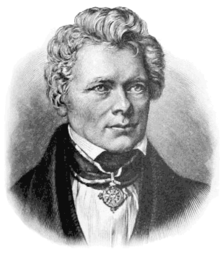
This is one of my favorite moments in German Romantic history.  Schelling was one of the most acute, passionate, and profound thinkers of Romanticism, whose insights challenged thinkers such as Fichte and Hegel.  His thought was incredibly influential to Samuel Taylor Coleridge, who would really stoke the fires of British Romanticism.  Schelling's rigorous intellect, strong-willed character, and joyful stoicism was so remarkable, that upon first meeting him, Caroline Schlegel wrote to her brother-in-law, Friedrich . . .

Caroline Schlegel: Believe me, my friend, he is, as a man, more interesting than you concede: a real primal nature [rechte Urnatur]; in terms drawn from the world of minerals—granite.
Friedrich Schlegel: But where will he find female granite?

This is quite a statement coming from Caroline, who was married to another great German Romantic, August Wilhelm. She was a tenacious mind during this period, who between debating Novalis, Fichte, Hegel, Schiller, and even Schelling, was able to find the time to translate Shakespeare's works into German. This poignant moment of correspondence brings a smirk to historians' faces, because after divorcing Friedrich's brother, Caroline proved this moment prophetic moment by marrying Schelling, and showed that granite comes in many forms.


Wednesday, July 11, 2012

Why Gold Is Precious

Schüler: Das sieht schon besser aus! Man sieht doch, wo und wie.
Mephisto: Grau, teurer Freund, ist alle Theorie,
                 Und grün des Leben goldner Baum.
Schüler: Ich schwör' Euch zu, mir ist's als wie ein Traum.
                                                              (Goethes Faust)


When the sun bathes green trees with gold
no one wonders why this color enchants us.
A golden bracelet or ring reminds of evenings
when the sun's raiment clothes us like gods.


Gold is the color of the dying day,
that precious precipice where
the sun shakes her amber tresses
and we, her struck lovers, pause
as the whole enamored room turns
to all shades of rose and warmth.


We love gold because it testifies
to the setting we all long for,
the setting we're working for,
the vital concern of this 
living death or dying life.


We live for those Midas moments
whose alchemy and aura will
transfigure everything in sight
before we restfully settle
into our place in the horizon.


Tuesday, July 10, 2012

Book Spine Poetry: My Way of Life


There are new seeds of contemplation
growing in
the place within
my way of life:
the way of the pilgrim is
walking
with ambition and survival,
with confessions and cricket songs.
Searching for the the Discarded Image
of God who comes to mind.

We wander with Paradise lost
while God's many-splendored Image lies
like love in the ruins,
when love alone is credible.

The fact that earth abides
is a severe mercy
especially when miracles
sting through our broken music.

So let us rejoice in
poetry, language, thought,
till we have faces
and the courage to be.

Books
New Seeds of Contemplation, Thomas Merton
The Place Within: The Poetry of John Paul II, John Paul II
My Way of Life. A Pocket Edition of St. Thomas. The Summa Simplified for Everyone, Frs. Farrell and Healy
The Way of the Pilgrim, Anonymous Russian Peasant
Walking, Henry David Thoreau
Ambition and Survival: On Becoming a Poet, Christian Wiman
Confessions, St. Augustine
Cricket Songs. Japanese Haiku, Harry Behn
The Discarded Image. An Introduction to Medieval and Renaissance Literature, C. S. Lewis
Of God Who Comes To Mind, Emmanuel Levinas
Paradise Lost, John Milton
God's Many-Splendored Image. A Theological Anthropology for Christian Formation, Sr. Verna E. F. Harrison
Love in the Ruins, Walker Percy
Love Alone is Credible, Hans Urs von Balthasar
Earth Abides, George R. Stewart
A Severe Mercy, Sheldon VanAuken
Miracles, C. S. Lewis
Broken Music, Sting
Let Us Rejoice: Poems 2003-2009, Seth Jani
Poetry, Language, Thought, Martin Heidegger
Till We Have Faces, C. S. Lewis
The Courage To Be, Paul Tillich

Friday, July 6, 2012

Rob Bell Doppelgänger

So today I saw this actor Jere Burns and he struck me as someone very familiar, but I couldn't put my finger on it . . .
The tone of voice, the facial structure, the delivery of his lines, etc.  Too bad he's playing a manipulative and villainous psychiatrist, when he could be a great Southwest Michigan pastor . . .